Surf is up Monday morning as we move into a relatively hot and dry week. Getting harder to forecast the flow/surf and things still depends on inflow into a full Chatfield that then is (for the most part) matched as a release out of Chatfield.
So, we are on eggshells this week and might see lower flows but hope this prediction is wrong.
Good news is the monsoon season has yet to arrive. Weather pros think the monsoonal flows will kick in mid-month… and in the prior two season, monsoon rain storms resulted in good afternoon days of surf at RRP (especially Sixx).
All this week, we will be keeping an eye on the Strontia release and waiting for Brent’s chess move on the daily water flows. Will update with the official Chatty release that have been sent out by Brent (the water manager) typically mid-morning.
Here are the links to watch;
Chatfield gauge (take 2-3 hours to impact RRP; click on raw/all values then table view for 15 min updates to flow levels): https://dwr.state.co.us/Tools/StationsLite/PLACHACO?params=DISCHRG
RRP gauge (click on raw/all values then table view for 15 min updates to flow levels): https://dwr.state.co.us/Tools/StationsLite/PLAUNICO?params=DISCHRG
Sixx Pole Cam: https://www.senserasystems.com/public/embed/3M7824646H83
Golden will be surfable. Pueblo is below surfable. Eyes are on Scout Wave in Salida to see if the sand bagged version “v-wave” is surfable this week.
RIVER SURFING TIP:
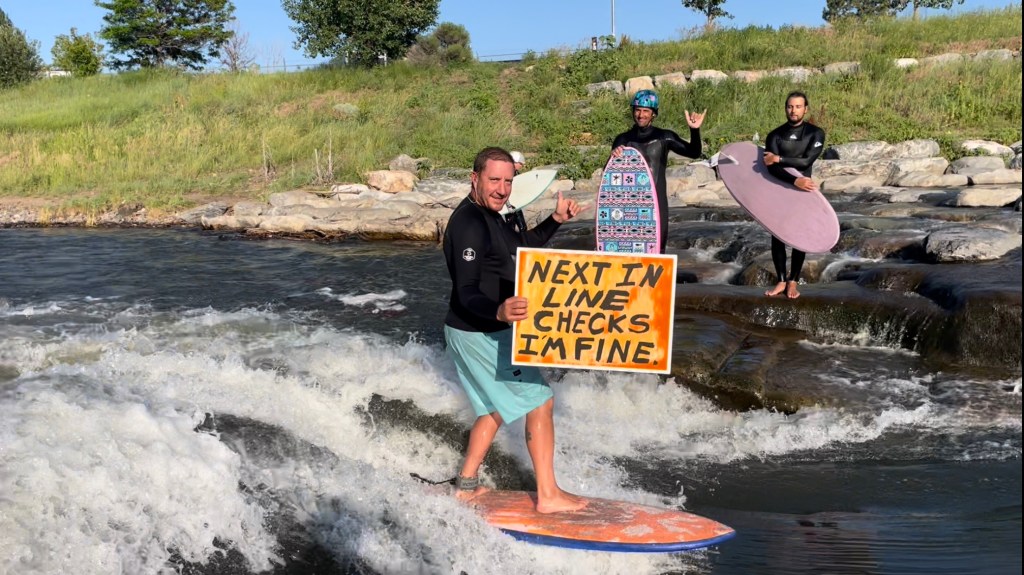
(Next in line checks they’r fine)
Local long time river surfer ripper, Rasta Ben, years ago came up with a brilliant saying; “Second in line makes sure they’r fine.” Meaning second person up in the queue keeps an eye on the surfer who ends their wave to make sure they are ok…. We are going to add to that saying with: “Next in line makes sure they are fine”. In other words when you are next up and about to jump on the wave, pause and watch for two things as the surfer riding in front of you exits the wave:
First, has the surfer’s board cleared the back of the wave and is not stuck bouncing in the secondary wave (wait until the board clears or you might get their surfboard in the kisser if you miss your jump/landing on the wave).
Second, you as the next surfer in line, have the best vantage of the prior surfer to observe if they made it off the wave safely (no head/face hit, watching for longer than normal hold down, direction of the board, etc).
The pause by you in this process will feel like forever but sure beats a trip to the ER from the prior surfers board and it keeps everyone safe, including the surfer before you.
SURF TRIVIA: Why do Aussie surfers call US surfers “Seppos”?
PRIOR SURF TRIVIA ANSWER: The best time of day to surf on the US east coast is day break to about mid-morning because the wind is typical light offshore and grooms up what ever swell is producing surfable waves. The wind direction goes from the colder land toward the warmer ocean and makes for clean surf. Typically in the summer, the land heats up quickly with the sun and the wind switches direction from the colder ocean to the land. This puts a texture or chop on the waves.
Something similar happens on the US west coast with the “evening glass-off” as the sunsets and the land cools as compared to the ocean and switches the winds from onshore to offshore to clean up the surf from whatever swell is in the water.
Keep an eye on the surf and keep an eye on the surfer before you after they exit the wave!!! LBK
 The Denver Surf Report