Dynamics of low head dams are part of the National Dam Safety Awareness Day. In truth, we surf recreational low head dams; but, most low head dams are NOT safe to recreate in (aka to surf on). Matter of fact, some river waves at one flow can be safe to surf, but at higher flow, too dangerous to surf.
So before jumping in the wave, do your homework/research for each spot you are going to surf, talk to locals, scope and walk down river looking for eddy exit points along with potential hazards, and “WHEN IN DOUBT, DON’T GO OUT”….
Seriously though, here are helpful safety tips from the river surf crew in Dayton, Ohio… https://www.surfdayton.com/blog/2020/9/16/dayton-surfing-etiquette-101

TYPES OF LOW HEAD DAMS:
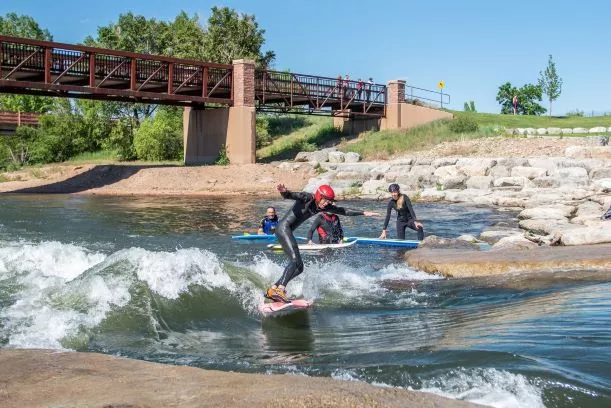
- Recreational Structures– These structures are specifically intended to provide recreational amenities and many towns and cities in Colorado now have river parks and play holes which draw tourists and locals alike. Fisheries biologists have also constructed fish habitat structures such as J-hooks and cross veins in numerous rivers and streams. As recreational amenities, these structures are designed to provide a fun river experience and are therefore considered the least hazardous
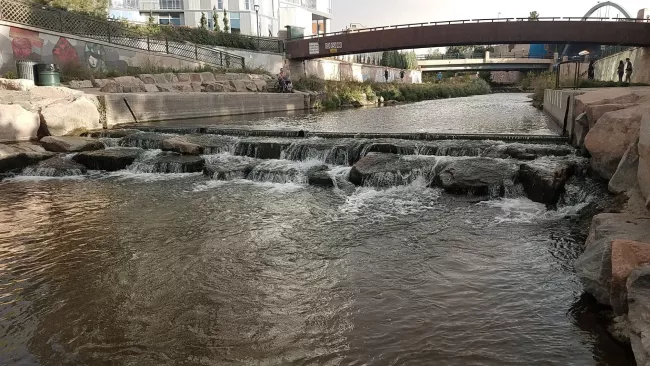
- Grade Control Structures– Grade Control Structures also span the width of streams and rivers and are meant primarily to control the elevation of the river channel upstream of the structure by preventing the erosive process of headcutting. Grade control structures are engineered to resist erosive forces and create a new equilibrium within the stream/river reach. Modern grade control structures are sloped to prevent the development of recirculating currents that could trap boaters, making them somewhat less hazardous than diversion structures.
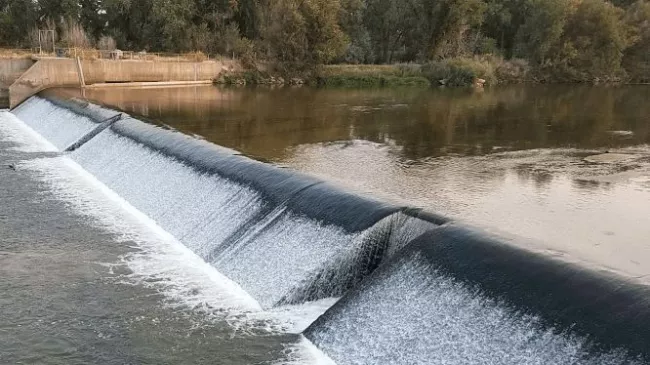
- Diversion Structures– Diversion structures were built to pond water on the upstream side to enable some of the water to be delivered to canals and ditches that then flow away from the river for the intended uses. When not all water is diverted the remaining stream flows over the structures and returns to the river system. Diversion structures may have vertical or sloping downstream faces and can also include boat chutes and fish ladders. Diversion structures are the most hazardous to recreators as they are most likely to create inescapable recirculating currents just downstream of them.
For more information/knowledge about low head dams including a heat map of low head dams in Colorado, click on the Colorado’s Low Head Dam Safety website by Department of Natural Resources (DNR).. https://dnr.colorado.gov/initiatives/colorado-low-head-dams
For more info on National Dam Safety Awareness Day click on https://www.fema.gov/emergency-managers/risk-management/dam-safety/awareness-day
LBK
 The Denver Surf Report